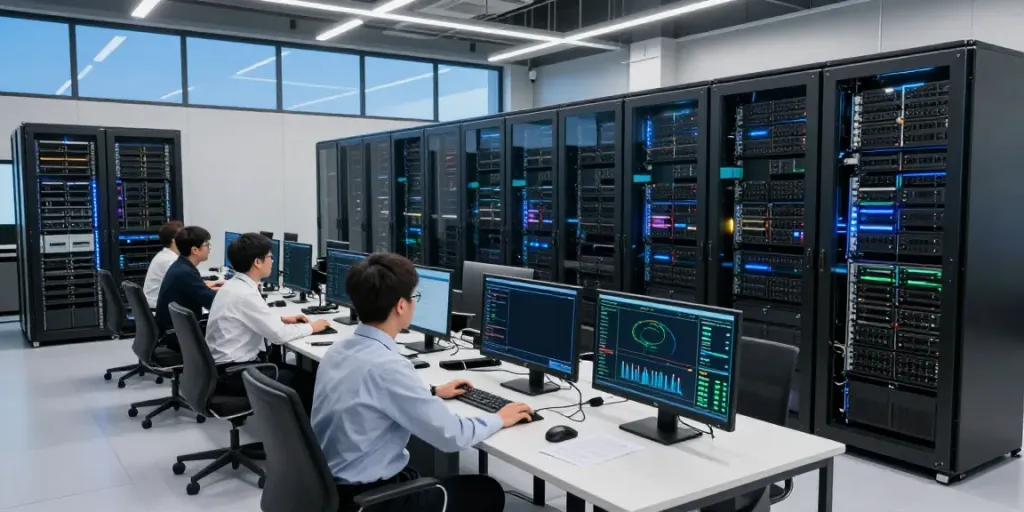
Understanding AI Data Centers
As the backbone of the rapidly evolving artificial intelligence (AI) landscape, AI data centers are specialized facilities designed to support complex AI workloads. These centers uniquely combine high-performance computing resources with robust power infrastructure to ensure efficiency and reliability. In an era where AI applications are becoming increasingly integral to operations across various industries, understanding the mechanics behind an AI data center is essential. When exploring options, AI data center capabilities provide comprehensive insights into how these facilities function and scale.
What Is an AI Data Center?
An AI data center is a facility equipped with specialized hardware and software tailored for AI applications, particularly those involving machine learning and deep learning algorithms. Unlike traditional data centers, which primarily rely on CPUs for processing data, AI data centers utilize high-density Graphics Processing Units (GPUs) to handle the massive computational demands of AI tasks. This strategic choice enables AI data centers to perform complex calculations at much faster rates, fostering innovation and efficiency in AI model training and inference.
Key Features of AI Data Centers
- High-Density Computing: AI data centers leverage GPUs that provide the necessary computational power for simultaneous processing of multiple data streams.
- Optimized Cooling Solutions: Given the heat generated by intensive computations, advanced cooling systems are integral to maintaining operational efficiency and hardware longevity.
- Scalable Infrastructure: The design of AI data centers allows for easy scalability, accommodating evolving user requirements and increasing workloads without compromising performance.
- Robust Power Supply: Reliable power management is critical as AI workloads demand significant energy resources, necessitating redundant power sources and uninterruptible power supplies (UPS).
The Role of Power in AI Data Centers
Power is fundamental to the operation of AI data centers. With the emphasis on AI and machine learning, the demand for constant and efficient electricity supply has amplified. Data centers must ensure that their infrastructure can handle fluctuating workloads while maintaining optimal efficiency. This involves implementing sophisticated energy management systems to monitor and allocate power resources effectively, thus minimizing costs and maximizing output.
AI Infrastructure Power Plans Explained
Choosing the right AI infrastructure power plan is crucial for users looking to engage with AI data centers effectively. These plans are designed to cater to different needs, ensuring that each participant can find an option that aligns with their operational goals. Understanding the nuances of these plans can greatly enhance participation in the AI Token Economy.
Types of AI Infrastructure Power Plans
AI infrastructure power plans come in various forms, typically categorized based on the level of power access and commitment period. Common types include:
- Core Power Access (S1): This plan offers essential access suitable for basic AI workloads.
- Enhanced Power Access (S2): Provides additional capacity for more demanding applications.
- Advanced Power Access (S3): Designed for high-performance applications requiring substantial resources.
- Professional Power Scale (M1): Focused on enterprises aiming for efficient resource allocation.
- High Power Efficiency (M2): Prioritizes energy-efficient operations without sacrificing performance.
- High Power Capacity (M3): Caters to organizations with extensive computational needs.
How Power Plans Support AI Workloads
Power plans are structured to align with specific workload demands within AI data centers. By tracking the energy usage and performance metrics of supported AI workloads, these plans help optimize electricity allocation. For instance, as more AI inference tasks are processed, the platform can dynamically allocate additional power resources to meet growing demands.
Benefits of Choosing the Right Plan
Choosing the right power plan offers several advantages:
- Cost Efficiency: More tailored plans can result in reduced energy costs.
- Performance Optimization: Aligning the plan with workload requirements ensures consistent performance levels.
- Scalability: Easy adjustment of power plans allows organizations to scale operations seamlessly.
- Predictability: Well-structured plans enhance budget forecasts by providing predictable power costs.
Participating in the AI Token Economy
The AI Token Economy represents a transformative shift in how individuals and organizations engage with AI technologies. By participating in this economy, users can contribute to and benefit from AI resource utilization through token-based metrics.
Your Role as a Participant in AI Data Centers
Participants play an essential role within AI data centers, providing power resources to sustain operations. This involvement not only supports the AI infrastructure but also allows participants to earn rewards based on their contributions. This symbiotic relationship fosters a sustainable and efficient AI ecosystem.
Understanding Contribution Rewards
Rewards in the AI Token Economy are calculated based on the power contributions made by each participant. The platform records electricity usage, monitors operational performance, and then calculates rewards based on verified contributions. This transparent rewards system encourages greater participation and investment in energy resources.
How AI Tokens Are Measured
AI tokens are utilized as units of measurement for AI model usage, functioning similarly to how kilowatt-hours measure electricity. Each interaction with an AI system involves input tokens that are processed by the data center's GPUs, generating corresponding output tokens. This straightforward token system simplifies the tracking of usage and the calculation of rewards.
Challenges in AI Data Center Operations
Despite their advantages, AI data centers face several operational challenges that can hinder efficiency and growth. Addressing these is vital for maintaining optimal performance and sustainability.
Common Misconceptions About AI Infrastructure
A prevalent misconception is that AI data centers serve only large enterprises. In reality, these facilities can accommodate businesses of all sizes by offering flexible power plans that scale with specific needs. Additionally, the misconception that AI workloads require specialized hardware can deter smaller players from participating, despite the availability of adaptable solutions.
Obstacles in Scaling AI Data Centers
Scaling an AI data center often involves high costs associated with acquiring additional hardware and managing increased energy demands. Furthermore, regulatory challenges related to energy consumption can impact expansion plans. Proper planning and investment in infrastructure are necessary to mitigate these challenges.
Best Practices for Managing Power Resources
To maximize efficiency, organizations should implement best practices such as:
- Real-time Monitoring: Utilize management systems that provide insights into power usage and operational efficiency.
- Dynamically Adjust Plans: Regularly reassess power plans to align with shifting workload demands.
- Invest in Renewable Energy: Explore sustainable energy options to mitigate costs and environmental impact.
- Optimize Hardware Usage: Ensure that AI workloads are efficiently distributed across available resources.
Future Trends in AI Data Centers
As we progress into the future, AI data centers are expected to evolve significantly. Keeping abreast of emerging trends is essential for organizations looking to stay competitive in the AI landscape.
Emerging Technologies in AI Infrastructure
Technologies like quantum computing and advanced AI algorithms are expected to reshape the capacity and capability of data centers, enabling them to tackle previously insurmountable computational tasks.
Predictions for 2026 and Beyond
By 2026, AI data centers will likely see an increase in automation, reducing human intervention in operations and leading to more efficient management of resources. Additionally, the integration of AI into data center operations will enhance predictive maintenance, optimizing the lifespan and performance of hardware.
Environmental Impact and Sustainability Considerations
As the demand for AI grows, so too does the need for sustainable practices in data center operations. Focusing on energy efficiency, utilizing renewable resources, and improving waste management will be crucial in mitigating environmental impacts.
Frequently Asked Questions
Addressing common questions can provide clarity to individuals interested in participating in the AI Token Economy.
What is the AI data center?
An AI data center is a specialized facility designed for handling the computational demands of AI applications, equipped predominantly with GPUs to support high-performance tasks.
Where are most AI data centers located in the US?
AI data centers are primarily concentrated in technology hubs such as Silicon Valley, Seattle, and Austin, where they benefit from access to skilled labor and robust infrastructure.
Who is the largest AI data center?
As of 2026, major tech companies like Google and Amazon operate some of the largest AI data centers globally, driven by the increasing demand for cloud-based AI services.
How do I participate in the AI token economy?
Individuals can participate by selecting an AI infrastructure power plan that suits their needs, contributing to the electricity required to power AI factories, and earning rewards based on their contributions.
What are the benefits of AI Infrastructure Power Plans?
AI Infrastructure Power Plans offer various benefits, including cost efficiency, performance optimization, and scalability, allowing participants to engage more effectively with AI resources.